Traditional field rearing
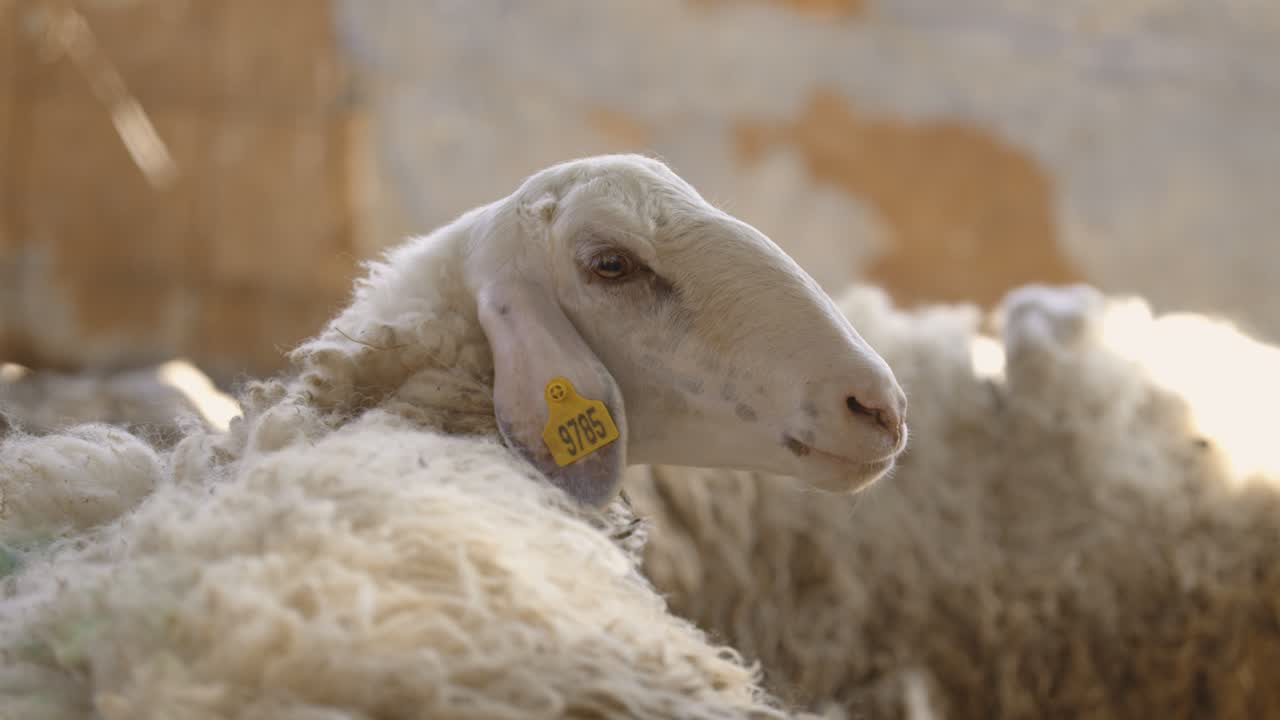
Young sheep raised alongside their mothers on the pasture of the Seville countryside. The natural growth cycle is respected until the animal reaches the age and characteristics each market asks for.
Province of Seville · Andalusia
We raise lambs and young sheep on 630 hectares of grazing land in the province of Seville, for buyers in Spain and abroad.
The farm in figures
ewes, approximately
hectares of grazing land
of the year grazing, approximately
Company
We are a newly founded sheep farming company based in the province of Seville.
The company has three partners. Two have long experience in business, investment and management. The third comes from a family of shepherds going back generations and brings hands-on knowledge of handling, feeding, breeding and caring for the animals.
We want to be a reliable sheep supplier and to work with our customers over the long term.
Production
We raise lambs and young sheep from 6 to 18 months old, male and female. We work with abattoirs with and without Halal certification, depending on the destination market: it is not required in Spain and it is essential for markets such as Algeria.
Young sheep raised alongside their mothers on the pasture of the Seville countryside. The natural growth cycle is respected until the animal reaches the age and characteristics each market asks for.
Animals under nutritional monitoring, for consistent conformation and weight on larger orders.
Through a specialised partner, for markets that need cold storage, international logistics and year-round supply. When the destination requires it, slaughter takes place in abattoirs holding official, current Halal certification.
We plan to increase production, by expanding the flock or adding output from other farmers, to handle larger orders.
To prepare a quote we need the type of animal, the quantity and the delivery dates.
Request an offerFarm
Our animals graze on around 630 hectares in the province of Seville, in Andalusia.
For roughly 90% of the year they feed on the pasture available on the land. This reduces our reliance on external feed and keeps production closely tied to the land.
Solar grazing
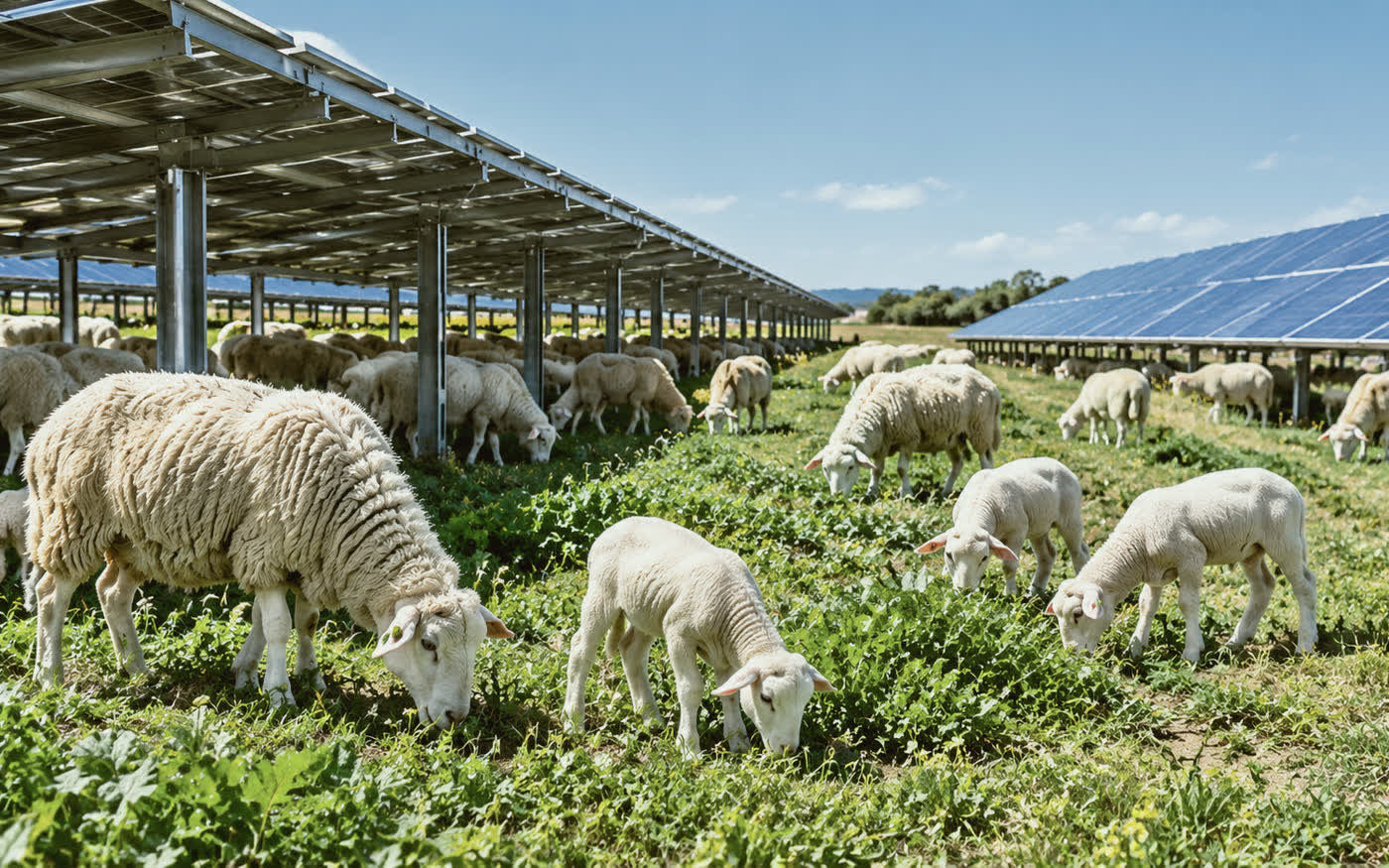
A significant part of our land hosts solar energy installations. The sheep graze under and around the panels throughout the cycle.
The same land produces energy and feeds the flock, an arrangement known as agrivoltaics. It suits the plant operator, who needs vegetation under control, as much as it suits us, since we use a resource that would otherwise have to be cleared with machinery.
What the grazing brings
The sheep eat the vegetation and reduce the build-up of dry grass, a factor associated with fire risk.
Grazing replaces part of the mechanical clearing, with less machinery, fuel and associated emissions.
What would be cleared as plant waste becomes feed, and the manure returns organic matter to the soil.
With the right stocking rate and timing, grazing forms part of the upkeep of the land and the landscape.
The animal is raised on land that produces renewable energy, and that is a story the final buyer can tell.
We offer grazing as a service to solar plant operators: vegetation control with a stocking rate sized for each installation. With a flock of around 1,000 ewes we can take on large areas.
Markets
We sell in Spain and are looking to build stable supply relationships with importers in the Mediterranean and North Africa, including Algeria.
We are interested in long-term supply agreements with each customer.
Buyer profiles
Our animals feed on the land for roughly 90% of the year.
One of our partners comes from a family of shepherds going back generations.
Two partners bring experience in management, investment and market development.
We plan to increase production to serve more customers.
We are based in the province of Seville, in Andalusia, a region with a long tradition of sheep farming.
We are looking for stable supply agreements with each customer.
Contact
We work with buyers in Spain and abroad, with particular interest in the Mediterranean, North Africa and Europe. Tell us what you need: type of animal, approximate volume and destination.